3.13.2009

Fear of Fines

7-Imp has a great Day 4 Share a Story-Shape a Future conversation between Jules and Adrienne Furness from What Adrienne Thinks About That about making libraries work for patrons. She touches on a number of issues that often keep people from feeling comfortable about using the library - and fines is one of them.

I have thought off and on about fines and their impact over the years but didn't think too much about the impact it was having on people's feelings about the library. Then one day, I was talking with a parenting coach about how we can increase library use. She said that many families she worked with were afraid to use the library because of fines. That caught me up short. I can understand not liking fines or the idea of fines. But fines as a self-made choice to stop using the library. Whoa! My eyes popped open!

I asked her if she thought her families purchased books, DVD's or CD's. She said yes all of the families she worked with owned materials in their home. I talked a bit about how a family's fines on a monthly or semi-annual basis rarely equaled the cost of a new book or CD or two or three. The fines help with our budgets and do help get materials back to us. And we are always willing to negotiate when we can to keep the materials flowing from the library into people's hands. I also mentioned that no family could afford to have the variety, depth and breadth of materials that their tax-supported public library provides.

It gave me an opportunity to think about what libraries provide and a chance for my colleague to consider some other information to provide to her families to encourage them to conquer their fear. And it humbled me to think about what a barrier those darn fines can be. It started me sharing with patrons my own fine-filled life (oh, like fines on most of my stuff all the time - except now I'll be better with Library Elf thanks to Adrienne!) and that it was ok not to be perfect on that stuff. And it points me in the direction of what to say to non-users to ease their fears at least and have them thinking about using us.

3.10.2009

Finding Great Kids Books - Read, Talk, Share


Over at Share a Story-Shape a Future, the fab blog tour for literacy is on a roll! Day One was all things about creating environments that nurture raising readers. Today it's about how to select great reads. Each thought-provoking post deals with a different aspect of the theme written by a different blogger. And for all of us working out in the field of children's librarianship, these posts are worth keeping.

As I read through today's writings and picked up great tips, reinforcement and many reading gems, it got me thinking about our role as Children's librarians in leading kids and parents to books. All of us may not have access to ARCs but we do read reviews widely - both in print journals like SLJ, Booklist, BCCB, Horn Book, Kirkus and more; and via the many children's lit blogs. These sources give us a tremendous "heads-up" on what is new and how this or that title is a perfect fit for individuals and groups in our community.

And then, like Christmas morning, when those newly ordered books come in, we take them home to peruse, read and think of more kids to connect them to. We consider titles that will be perfect for our infant or baby or toddler storytimes; books that will sparkle interest during a class visit; books to share with our school library colleagues or teachers; books that will tempt that reluctant reader to try something new. And we'll talk about the books - with other staffers; in our book groups; to parents and kids; in programs; in the grocery store; over a cup of joe or tea with a friend.

And, most important, we'll share the love - our enthusiasm and knowledge gained through knowing the books and knowing how to find great book suggestions. Parents and kids want to know what to read or hear what we are excited about. By sharing our knowledge and connecting kids, we encourage reciprocal sharing. So when kids and parents ask us "Do you know a good book I can try?"; when teachers ask us "Can you suggest anything for my students?", it is easy for us to answer yes and put books in hand!

3.09.2009

ARCs Across the Sky

Staffers and I are still hip deep in ARCs (Advanced Readers Copies) that we picked up at ALA Midwinter in Denver in January. These uncorrected proofs give readers a pre-view of upcoming books by new authors, sequels in series and books that editors & marketers are especially excited about. Over the years, these sneak peeks have allowed me to read eventual Newbery winners; put my hands - and eyes -on hot commodities and be happily alerted to fine new voices in Childrens and Teen literature. It is always a privilege to pick these up and often a wonder to open the pages.

I've been engrossed in manga; Susan Patron's Lucky Breaks, sequel to the Higher Power of Lucky; Ellen Tarshis' quirky heroine's return in Emma Jean Lazurus Fell in Love; Kate Thompson's Highway Robbery; Don Calame's Swim the Fly; an Emily the Strange novel; Lisa Graff's Umbrella Summer plus a whole lot more (at my bedside yet!). Many more are spread around to readers who love youth lit throughout the library.

Once we've passed around and read these ARCs, we can hardly wait to get many of these titles on order. Some people have asked me over the years if we could just add these ARCs to the collection. The short, long and medium answer is no. Even with tight budgets, we cheat the authors and publishers of the small profits they make by selling books. When a library adds these "preview" books - often not the final, edited version - it means that we satisfy our perceived budget shortfalls by making it hard financially for book creators. Unless an author specifically puts their content out for free, we owe it to them to purchase the book for our community so that author and publisher can keep producing more great reads for kids. So please read ARCs, but don't add them - order the book when it is published!

3.03.2009

TV & Teeny Kids

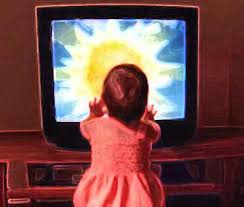
A study just published again emphasizes that TV for tots (under the age of two) has no brain-boosting power. Although the American Academy of Pediatrics recommends no television viewing for children under age 2, it is surprising how much TV that researchers have found these little ones watch. Stop here for a Web MD article on the study results. Thanks to my co-worker Abigail (aka The Hedgehog Librarian) for the link!

2.27.2009

Share a Story -Shape a Future

Share a Story - Shape a Future A great blog tour by and for librarians, teachers, parents and people passionate about literacy will be happening March 9-13. Called Share a Story-Shape a Future, A Blog Tour for Literacy, the weeklong event should give everyone a chance to celebrate reading and reflect on some interesting thoughts on raising readers, selecting great reading materials, using libraries, technology and reading and reading aloud. For the full scoop, visit the Share a Story-Shape a Future blog!

2.25.2009

Libraries Will Get You Though Times of No Money...

Motherreader has a great shout-out to libraries that includes one of my favorite lovably nerdy library songs. As I read her post I am reminded of the quote "Libraries will get you through times of no money better than money will get you through times of no libraries." We are really facing the reality of this as the economy spirals and our communities reel under layoffs, cutbacks and downsizing. I am glad we are here as people re-discover us!

No Sweat SLP Ideas

I am definitely someone who likes to work "smarter, not harder" in the summer. I don't get too frantic about the programs that we are planning. I just like to think about the possibilities for fun and getting kids together in the library and ZING! off we go. I like to plan the 2 months of summer like I plan any two months of the year: give me about a two-three month lead and we're good to go.

Of course this is all helped along by the fact the libraries I work in have participated in the Collaborative Library Summer Program (CLSP) - a grassroots consortium of forty-seven states "working together to provide high-quality summer reading program for children at the lowest cost possible for their public libraries." We can take advantage of great materials, great ideas, great booklists...well, great everything and save a ton of time. And with so many people across the country contributing and thinking, the sky is the limit on wonderful ideas.

And of course, beyond the manual, there are even more resources! My bible of the moment comes from Michele Farley, Indiana State Library Children's Services Consultant. She created a nifty little compendium, 101 Ideas for Getting Creative and Expressing Yourself @ Your Library at WebJunction that is chock full of great ideas for amazing programs that anyone can put together - presto! Many are simple, all are fun and the cost for most is low, low, low. And perhaps the best part of this list - the ideas are so great you can use them year-round to spark your creativity and freshen up your programs. Cool!

2.24.2009

What Are We Doing Here?

Whenever we start a new job - no matter how much experience we had previously - there is a "getting-to-know-you" period where you introduce yourself to colleagues both in your library and in organizations throughout your new community. As I work my 100th day here in my new job, I am feet-first in the midst of that particular dive and it has helped me reflect on just what it is we are doing in public library children's work.

The other day I sat down with an elementary school principal and she asked, "What is your vision of what you hope to do?". Hmmmm. This was followed by an interview for our system newsletter where I was asked, "What are the most important elements in children's services in libraries large and small?". Both questions lead me to the same places:

-I want to make sure we recognize that children are individuals with feelings, ideas, joys, sadness and the inevitable cranky day or two. Let this guide us in our work.

-I want to make Children's areas fun and a place where kids feel welcomed and smiled at and can delight in books.

-I want to be welcoming to community organizations, agencies and schools and collaborate and partner with them to support literacy and reading both at their sites and at the library.

Call me a starry-eyed idealist but in a fundemental way, I think libraries are truly the “people’s university” – a place that people of all ages and income levels can come to find information and resources that allow them to access the world. We are the one place that supports the foundation of all learning: reading and literacy. By working with children and families from the time kids are born, we help to build an informed and literate citizenry.

That's what I think we are doing. How about you?

2.18.2009

Will You Accept This Call?

Thanks to Heavy Medal blog's Sharon Mackellar for sharing this link to American Libraries delightful slice-of-life video of this year's calls to ALA Youth Media Award winners and honorees found on the site. I can tell you as a former member of both the Caldecott and Newbery Award committess that this is definitely one of the most fun moments in the whole process. Much laughing, some crying, great feelings!

2.16.2009

Down for the Count


There has been an interesting discussion during the past few days on the PUBYAC listserv about what to do to prevent kids from reporting dishonestly on the number of minutes they have read during summer reading program ("Honesty in Counting Minutes" thread). Respondents have been wonderfully mellow about the phenomenon - who hasn't had a kid/parent stand there in great indignation when they are caught red-handed? We can grit our teeth but is there an effective way to prevent cheating?

No matter how one structures a program or service, there are always going to be folks who find a way around it. What often happens is that we look for so many ways to prevent those few cheaters from taking advantage of what we offer, that we end up making extra work or hoops to jump through for staff and patrons both. What begins as a good idea to promote reading, our services or our collection accumulates so much sludge that it becomes no fun and a burden.

I'd love to become more free and not worry so much about this. My favorite wisdom in the discussion so far is from Robin Colvin of Lincoln Parish Library: "Participation in summer reading programs is voluntary, not mandatory. Why worry about whether they are fudging time or not? As long as they are reading and enjoying books and the library, then I think your mission is accomplished. If you're worried about whether or not they have "earned" prizes for meeting certain time-spent-reading goals, make sure your prizes are not worth fudging time over. There is nothing yuckier than having the prizes for reading outweigh the prize of reading."

Those are words I can work by!

2.12.2009

Teens Say "We Heart You"

Teen programs take many forms - from gaming to parties to podcasting and webcasting to...well, whatever. We are fortunate to have a very active Teen Advisory Council (TAC) at our library and a dynamic Teen Librarian, Linda Jerome. The TAC kids brainstorm ideas for a monthly teen program. Yesterday, the teens did a terrific "We Heart You" program that put the focus on positive messages for their peers and little kids.

Linda Jerome relates "Our Teen Advisory Council came up with the idea of spreading a little Valentine’s cheer by creating paper hearts to put in random books in our children’s and teen collections. Teens wrote positive messages (similar to what you might find on a candy heart) and decorated the paper hearts and then placed them in books for children and teens to find. The hearts placed in children’s books also had an additional sticker on them which directed kids to bring the paper heart to the Children’s Room desk for a little treat. Teens had a great time both coming up with messages and decorating the paper hearts as well as “hiding” them in books throughout the collections. We are curious to see how many of the hearts are turned in at the Children’s Room desk over the next few weeks!"

A day after the program, the first thrilled preschooler sidled up to the desk with the biggest grin on his face and a found "heart" in hand. The two little chocolate kisses he received completed the moment. This is an easy program and let teens show their "helping" side. What a sweet treat!

2.11.2009

Outer Limits


To limit or not to limit - that is the question. Having just come off the December holidays, almost survived Valentine's day (just...three...more...days, huff puff huff puff) and about to embark on the adventure of spring, St. Pat's Day and Easter day book rush time, talking about limits is swirling in my mind.

There are only a small number of titles available specific to any one holiday or season (alright, I'll cop to the fact that winter and Christmas books do seem to be in endless supply). These books languish on the shelves "between times" until the holiday season rolls around and then, "Boom!", the stampede for these titles is on. It's pretty much not a budgetary option for most public libraries to buy multiple, multiple copies or load up the collection with as many books on these subjects as can be unearthed.

So, though we love to fill requests and love to be as open as possible, the subject of limits comes up. Without limits, we create a “first come, first served” expectation rather than one where we try to provide some kind of consistent and fair way for many people to have a chance to enjoy very limited but high demand resources. Setting limits of a few books per family or group allows us to have more resources available for more people.

Of course it also means people will have to share with others. That may be the true "outer limits" nature of the beast. Limits can work with patience and gentle explanations to our customers (who sometimes want more, more, more). At least we hope so!

2.09.2009

The KISS Theory on Pre-Reading Skills


I don't know if others are as frustrated as I have been when using/explaining/talking about the six early literacy skills that serve as a foundation for preschoolers in their learning to read and write. You know:


Print Motivation
Vocabulary
Print Awareness
Narrative Skills
Phonological Awareness
(puh-lease don't make me say that word!)
Letter Knowledge

It's not that I don't understand this stuff but parents, providers and I often glaze over at the titles of each skill. Isn't there an easier way to title these puppies?

Well, Amy over at Literacy Launchpad just did a great post citing a Calgary Herald list that simplifies the names and concepts beautifully. I'll take "I Hear Words" over "Phonological Awareness" any day of any week! As a busy public librarian, I appreciate that and I know the families and providers I share this information with will appreciate it too!

Thanks to Jen Robinson's Book Page and Scrub-a-Dub-Tub for the Children's literacy Round-up link!

2.07.2009

A Re-Located Me


I have recently moved to the beautiful west coast of Wisconsin where I now work at a larger library as Coordinator of Youth Services. It's a real treat to work with a group of creative and imaginative staffers who maintain great senses of humor with a fierce dedication to kids and teens.

This blog began as a learning exercise/experience with Project Play, a self-paced Web 2.0 learning adventure. I thought it might be time to breathe new life into it and let it shine again.

I look forward to sharing not just my ideas and tips here, but those of my co-workers as well. And, if all goes well, I'll share ideas from my colleagues around our 39 member-library's system. The more we know and share, the better we become at our jobs!

"Do-We" Know Dewey?


A great way to teach the Dewey Decimal system concept to kids is to break it down into a really fun activity. This is perfect for a class visit or scout tour.

Talk to the kids about how the library is organized a lot like a grocery store. "Like" things are kept together. Milks together; toothpaste together; candy together. You wouldn't find frozen ice cream in the lettuce or look for cereal with the cheese. The dewey decimal system is just a way to keep books about the same stuff together.

Mention that the Dewey Decimal system is also like a world language. Ask the kids if they know words in any other language - you'll get lots of polyglot talk back! Then tell the kids that your world language is "Dewey". When you want a dinosaur book you know that 567=dinosaurs; or 398=folk and fairy tales or 636.7=dogs. Then walk them along the non-fiction and explain (briefly) the major areas and point out subjects popular to their age level.

Finally, the piece de resistance! Catalog, barcode and shelve the kids! Just ask them for a a favorite subject, write a corresponding dewey number on a sticker and put that and a barcode on the kids. Then put them in order and "shelve" them in their part of the collection as you walk along with them!

They have a great time and many kids really "get" it. And you always reassure them that staffers are there to help them translate dewey and find the books they want quickly and easily whenever they return!